Spring Storm Water Damage Prep: North Richland Hills, TX Guide
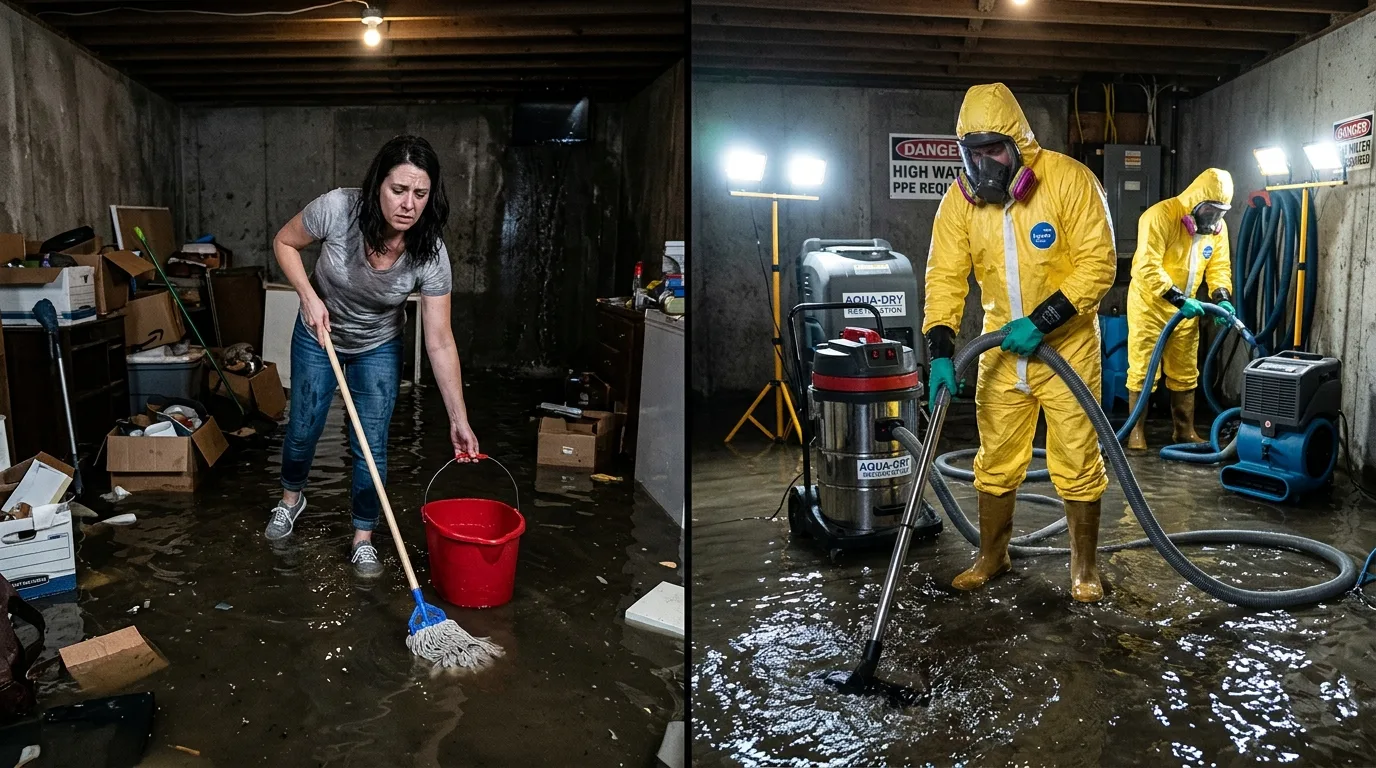
Every March, North Richland Hills homeowners face the same question: is your home ready for what the next three months will bring? Spring storm season in North Texas delivers severe thunderstorms, hail, and flash flooding that drives more water damage calls than any other time of year — and the homeowners who fare best are the ones who prepared in February.
In this post, we cover the most critical pre-storm preparation steps, what to do immediately when water enters your home, and how to navigate the insurance claim process when storm damage occurs.
Storm Damage in North Richland Hills? We Respond 24/7.
Call (877) 698-1311 for immediate water damage restoration dispatch.
Why Spring Storms Matter for North Richland Hills Homeowners
North Richland Hills averages its highest monthly rainfall in May — 4.1 inches — but the real danger isn’t the total rainfall; it’s the rate. Severe thunderstorms in North Texas are capable of delivering 2–3 inches in a single hour, far faster than drainage infrastructure can process. When stormwater outpaces the capacity of the I-820 corridor drainage systems, water backs up into residential streets and, from there, into homes at ground level and below.
Tarrant County’s highly expansive clay soil is a compounding factor. When the soil is already saturated from earlier spring rains, it becomes nearly impermeable — additional rainfall simply runs off the surface rather than absorbing. Properties in lower-elevation sections of Fossil Creek and Meadow Lakes neighborhoods are especially vulnerable because runoff from higher areas concentrates against their foundations. Understanding this drainage pattern is the first step toward protecting your property.
The window for flash flooding in North Richland Hills is narrow but severe. The National Weather Service issues Flash Flood Watches when conditions are favorable for 2 inches or more of rain in 3 hours — a threshold this area reaches multiple times each spring. Homeowners who monitor weather alerts and have their response plan in place react within minutes rather than hours.
Pre-Season Preparation Steps
Gutters and downspouts: Clear all debris from gutters before the first major storm. Clogged gutters force water over the edge and against foundation walls. Extend downspouts at least 4 feet away from the foundation — 6 feet is better on North Richland Hills’s clay soil, which holds water against the house rather than absorbing it.
Foundation grading: The grade of your yard should slope away from the foundation at a minimum of 1 inch per foot for the first 6 feet. Homes that have settled on Tarrant County’s clay soil often develop reverse grade — soil that slopes toward the foundation — creating a bowl effect that concentrates rainwater against the house. Correcting grade is one of the highest-value prevention investments.
Window wells: If you have below-grade window wells, install covers or ensure drains are clear. Window well flooding is a common water damage pathway in North Richland Hills during severe storms.
Sump pump: Test your sump pump every spring before storm season. Pour water into the pit to trigger the float and confirm the pump discharges water to a safe location away from the foundation. A backup battery sump pump is worth the investment — power outages during storms are common, and most sump pumps fail exactly when you need them most.
Flood cleanup North Richland Hills preparedness: Know where your water main shutoff is located and confirm it operates freely. If a storm causes a pipe failure or sewage backup, shutting off the water quickly is critical.
Practical Uses of Pre-Storm Preparation
Documenting your belongings: Before storm season, photograph or video your home’s contents. This documentation is essential for insurance claims after a water damage event. Store copies off-site or in cloud storage. Homeowners in the HomeTown Villas area who had documentation recovered significantly more from their carriers after the 2021 freeze event than those who didn’t.
Creating an emergency kit: A water damage kit — rubber boots, waterproof gloves, flashlights, a mop, and plastic sheeting — should be accessible before the storm, not after it. When water is actively entering your home, having supplies ready saves critical time.
Reviewing your insurance policy: Check whether your homeowner’s policy includes flood coverage (it often does not — standard HO-3 policies exclude rising floodwater). FEMA’s National Flood Insurance Program is available to Tarrant County homeowners. Sewage backup coverage is a separate endorsement many homeowners lack until they need it.
Knowing your drainage pattern: Walk your property after a moderate rain and observe where water pools. Low spots that hold water for more than 24 hours after rain are future water intrusion pathways. Address them before spring storm season with French drains or regrading.
Checking roof condition: Hail is common in North Texas spring storms and creates roof damage that allows water intrusion during subsequent rain events. Have your roof inspected after any significant hail event — even dime-sized hail can crack composite shingles and create small penetrations that cause ceiling water damage.
What to Do When Storm Water Enters Your Home
Move quickly when water enters — the first 30 minutes determine whether water stays confined to the entry area or spreads to adjacent rooms. Turn off the water main if the source is plumbing-related. Do not enter rooms with standing water if electrical outlets or fixtures might be submerged — circuit breakers for the affected area should be shut off before entering.
Remove valuables and porous items (area rugs, upholstered furniture, cardboard boxes) from the wet area if it is safe to do so. The faster you remove absorptive materials from contact with water, the less they saturate and the lower the overall restoration cost.
Water Entered Your NRH Home? Call Now.
Early response minimizes damage and cost. (877) 698-1311 — 24/7.
Cost Factors for Storm Water Damage Restoration
In North Richland Hills, minor storm water damage runs $1,200–$2,800. Major events affecting multiple rooms or including sewage backup from overwhelmed systems run $4,500–$9,000. Full flood events can reach $15,000. Tarrant County’s clay soil conditions can extend structural drying timelines, which affects mitigation costs relative to better-draining markets.
The most important cost variable is response time. Water damage addressed within 24 hours rarely requires mold remediation and involves less material removal. The same event addressed after 72 hours typically doubles in scope because moisture has penetrated structural assemblies and mold has begun establishing. Every hour counts.
Frequently Asked Questions
Does homeowner’s insurance cover spring storm water damage in North Richland Hills?
Most standard HO-3 homeowner’s policies cover water damage from rain that enters through a storm-damaged roof or broken window — sudden intrusion from a covered peril. They typically do NOT cover rising floodwater, which requires a separate NFIP flood policy. Sewage backup is covered only with a specific endorsement. Review your policy before storm season and add endorsements that close gaps for your specific risk. We help document all covered claims and work directly with adjusters.
How quickly does mold develop after storm flooding in North Richland Hills?
Mold can begin establishing within 24–48 hours of a water event in North Richland Hills’s warm, humid conditions. This timeline is shorter in summer months when both temperature and humidity are highest. Structural drying that begins within 24 hours of the event dramatically reduces mold risk. Waiting for the storm to “fully pass” before calling is the most common mistake homeowners make — call us as soon as the water enters, not after.
What makes flash flooding worse in North Richland Hills than other Texas cities?
North Richland Hills’s position in the I-820 drainage basin means stormwater from a wide catchment area concentrates quickly. Tarrant County’s clay soil dramatically reduces ground absorption compared to sandier soils in other Texas cities, creating more runoff from the same rainfall amount. The combination produces faster, more intense flash flooding than weather radar alone might suggest for a given storm event.
Prepare Before the Storm Season
Questions about water damage preparedness in North Richland Hills? Call (877) 698-1311 — we're available 24/7.
Related: