Prevent Burst Pipes During North Texas Winter Freezes: NRH Guide
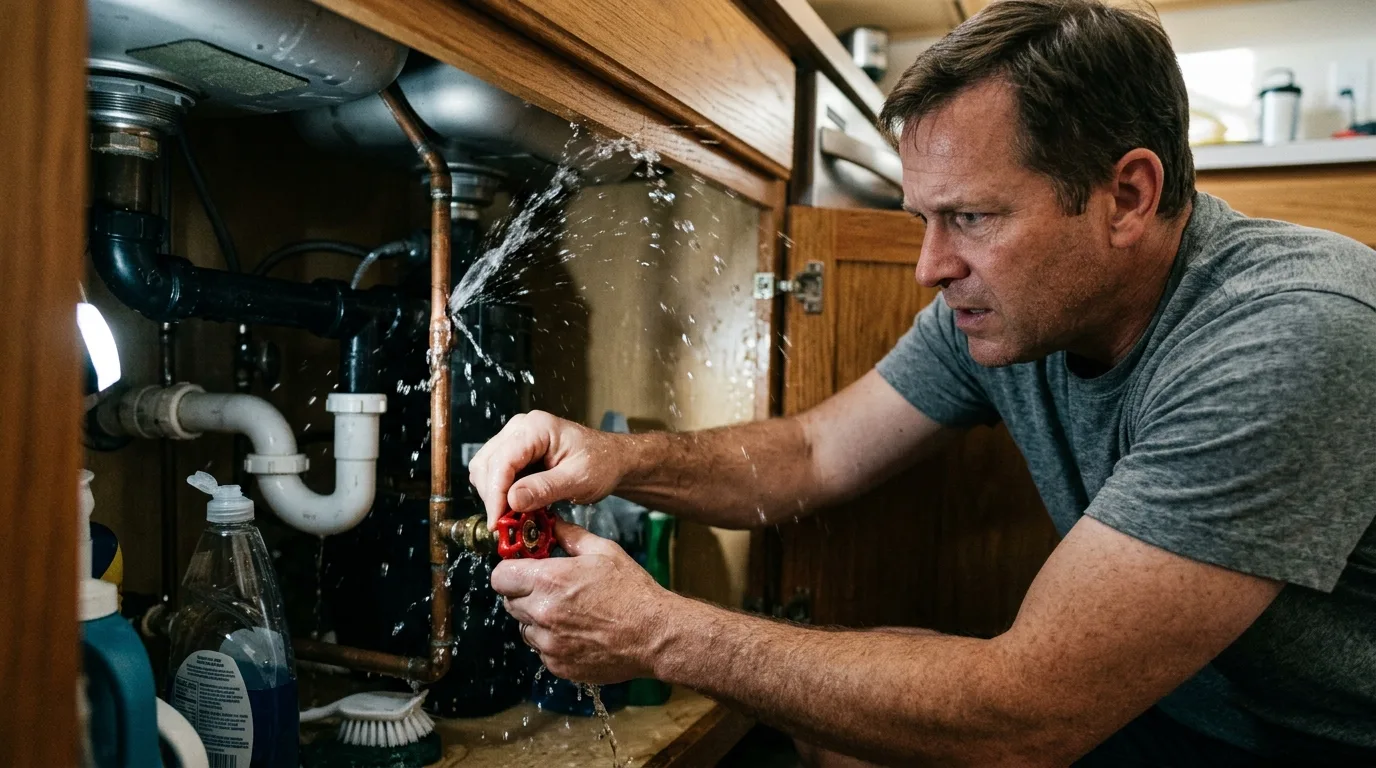
When the temperature in North Richland Hills drops below 28°F and stays there for several hours, supply lines in attics, exterior walls, and under-insulated crawl spaces face real freeze risk. Most North Texas homes were not built with the pipe insulation standards common in colder climates — and that gap becomes a serious problem during the hard freeze events that Tarrant County experiences most winters.
In this post, we cover the specific vulnerabilities in NRH homes, the most effective winterization steps, and what to do immediately if a pipe freezes before it bursts.
Burst Pipe in North Richland Hills? We Respond 24/7.
Call (877) 698-1311 immediately for emergency water extraction.
Why Burst Pipes Are a Major Winter Risk in North Richland Hills
The physics of burst pipes is counterintuitive: the pipe usually doesn’t burst at the point where it freezes. Instead, water freezes, expands, and increases pressure throughout the system — and the failure happens at the weakest point, which may be far from where the ice formed. By the time you hear water running inside walls or see a ceiling stain, the pipe has often been releasing water for hours.
North Richland Hills homes built before 1990 are at greatest risk because older construction standards didn’t account for the multi-day arctic events that North Texas occasionally experiences. Homes in the Smithfield neighborhood and on older lots throughout NRH frequently have supply lines routed through unconditioned attic spaces — a design that works fine in most winters but fails catastrophically during sustained hard freezes. The February 2021 freeze event left thousands of Tarrant County homeowners dealing with exactly this scenario.
Pipe Froze or Burst? Don't Wait.
(877) 698-1311 — 24/7 emergency water extraction and structural drying in North Richland Hills.
Pre-Freeze Winterization Steps
Identify your vulnerable pipes: Walk your attic and check for any supply lines — water heater supply, HVAC fresh air lines, irrigation system backflow preventers — that are exposed and not insulated. Pipes on exterior walls, especially north-facing ones, are higher risk. Under-sink supply lines in exterior wall cabinets deserve attention too.
Pipe insulation: Foam pipe insulation from any hardware store costs under $1 per linear foot and takes minutes to install. Wrap all attic supply lines, exterior wall supply lines, and any pipe in unconditioned space. Pay special attention to pipe fittings and connection points where insulation is often skipped.
Know your main shutoff: Locate your home’s main water shutoff and confirm it operates. In North Richland Hills, main shutoffs are often near the meter at the street or inside the garage near where the main line enters. Practice shutting it off before you need to — a shutoff valve that hasn’t been turned in years can be seized or difficult to operate under stress.
Dripping faucets during freeze warnings: During freeze warnings (below 32°F overnight), run a slow drip from faucets at the end of long supply runs — typically the faucet furthest from where the supply line enters the house. Moving water is significantly harder to freeze than standing water. The water cost is negligible compared to the damage from a burst pipe.
Cabinet doors open: During hard freeze events, open cabinet doors under sinks on exterior walls. This allows conditioned air to reach supply lines that are inside cabinet spaces against exterior walls — a simple step that protects some of the most vulnerable pipes in the home.
Types of Pipe Failures in North Texas Winters
Attic supply line failures: The most damaging scenario. A supply line in the attic bursts and water runs down into ceilings, walls, and floors throughout the home before the homeowner discovers it — often after returning from a holiday trip. These events regularly cause $20,000–$60,000 in damage in severe freeze years across Tarrant County.
Exterior wall supply lines: These fail during multi-day freezes when the wall assembly loses its thermal advantage. Signs include reduced pressure at end fixtures before complete failure.
Under-sink failures: Exterior cabinet supply lines freeze and fail during hard freeze events. Easier to catch quickly because the failure is usually visible when you open the cabinet.
Irrigation system backflow preventers: These are often in exposed locations and are among the most commonly freeze-damaged components. Insulate them before winter or have them blown out and shut off for the season.
Outdoor hose bibs: Even frost-free hose bibs can freeze if a hose is left attached, preventing the internal drain mechanism from working. Remove hoses before winter.
What To Do When a Pipe Freezes (Before It Bursts)
If water pressure drops suddenly or stops entirely in cold weather, a pipe may be frozen but not yet burst. Act immediately:
Open the faucet at the end of the affected run to relieve pressure when the ice thaws. Apply gentle heat to suspected freeze locations — a hair dryer, heating pad, or warm towels. Never use open flame. If you cannot locate or access the frozen section, call a plumber and be ready to shut off the main if pressure returns suddenly.
Never force a frozen pipe by applying excessive heat or physical pressure — a pipe that is frozen but not yet cracked can burst if the thawing process is too fast or if pressure builds before the ice clears.
Cost Factors After a Burst Pipe Event
Burst pipe water damage restoration in North Richland Hills runs $1,500–$15,000 depending on how long the pipe ran and how many rooms were affected. Attic supply line failures that ran overnight before discovery regularly cost $8,000–$20,000 in mitigation and reconstruction. Structural drying alone runs $2,000–$5,500. Insurance typically covers burst pipe events as a sudden, accidental occurrence — mitigation services, drying, and reconstruction are usually covered.
For perspective on the full restoration process after a burst pipe, see our page on water damage restoration in North Richland Hills and structural drying and reconstruction.
Frequently Asked Questions
How cold does it need to get for pipes to burst in North Richland Hills?
Pipe failure risk increases significantly when temperatures drop below 28°F and remain there for 4 or more hours. North Texas homes are especially vulnerable because insulation levels in attics and exterior walls are designed for mild winters, not sustained arctic freezes. Hard freeze events — defined as temperatures at or below 28°F for several consecutive hours — are the primary driver of burst pipe calls in NRH each winter.
Does homeowner’s insurance cover burst pipe damage in North Richland Hills?
Yes — burst pipes from a sudden, accidental freeze event are typically covered by standard homeowner’s insurance policies. The key word is “sudden” — slow leaks or maintenance failures may not be covered. Document everything immediately: photos of the water, the affected areas, and the pipe failure location. Call us at (877) 698-1311 for immediate response and complete documentation your carrier will need. See also our guide on water damage insurance coverage in Tarrant County.
What’s the most common burst pipe scenario during North Texas freezes?
Attic supply lines and exterior wall supply lines account for the majority of burst pipe events during hard freezes in Tarrant County. Older North Richland Hills homes — particularly those in the Smithfield and Fossil Creek areas built before 1990 — have attic-routed supply lines that were not designed for multi-day subfreezing temperatures.
Burst Pipe Damage in North Richland Hills?
(877) 698-1311 — 24/7 emergency extraction and structural drying across Tarrant County.
Related: