Expansive Clay Soil & Water Damage: What NRH Homeowners Must Know
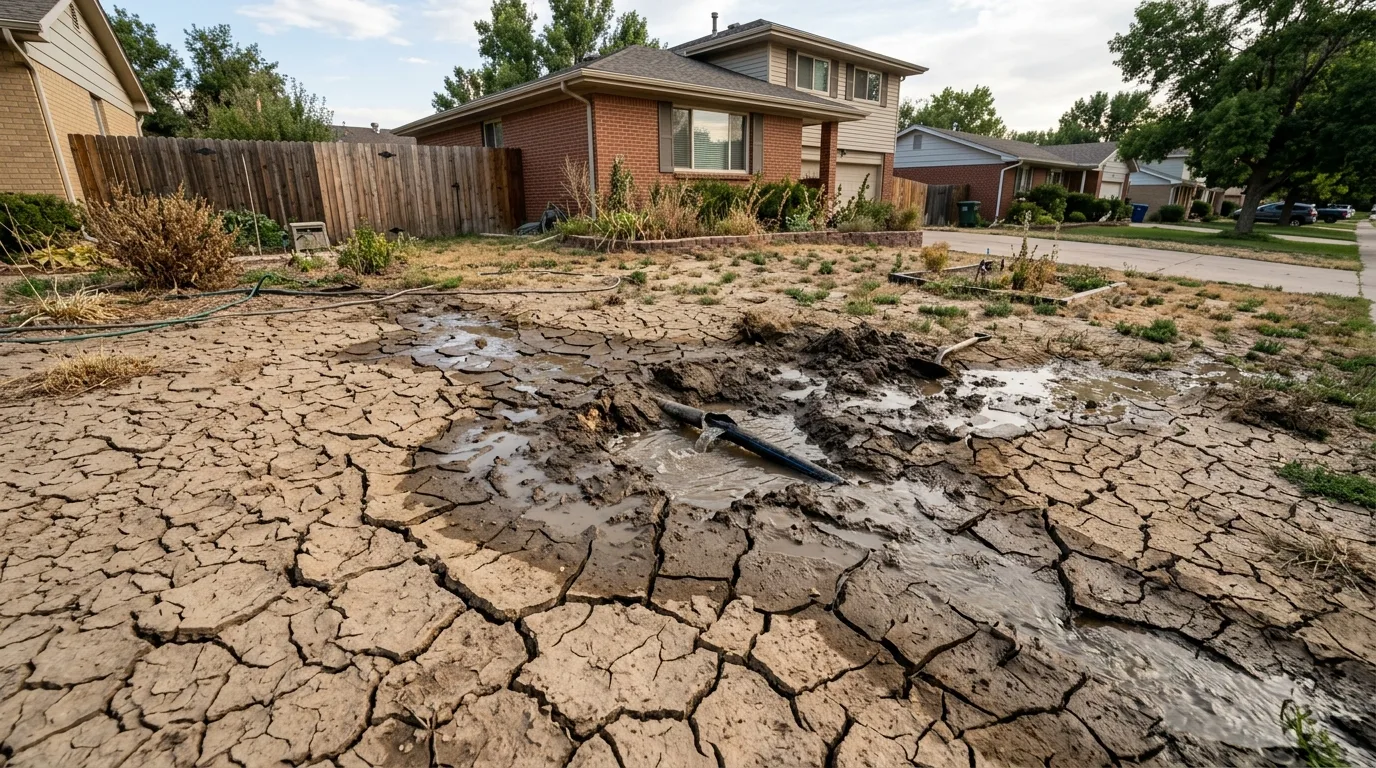
If you’ve owned a home in North Richland Hills for more than a few years, you’ve probably noticed the soil in your yard cracking during dry spells and heaving again after rain. That behavior — the expansive clay characteristic of Tarrant County soils — is the underlying factor behind dozens of water damage complications that other Texas cities simply don’t face at the same intensity. Understanding how this soil interacts with water events is one of the most important things an NRH homeowner can know.
In this post, we explain what makes Tarrant County’s clay soil different, how it amplifies water damage events, and what it means for structural drying and restoration in North Richland Hills.
Water Damage in North Richland Hills? We Know Local Soil Conditions.
Call (877) 698-1311 for IICRC certified restoration with Tarrant County expertise.
Why Tarrant County’s Clay Soil Is Different
Most of the DFW Metroplex sits on highly expansive clay soils classified as Vertisols — soils with clay content so high they exhibit dramatic volume changes with moisture variation. In Tarrant County, this clay swells with moisture increases of 20–40% in volume and shrinks by similar amounts during drought cycles. The shrink-swell cycle is not occasional; it repeats multiple times per year in response to seasonal rainfall patterns and summer drought.
This soil behavior has two direct effects on water damage restoration in North Richland Hills. First, clay soil that is already saturated from recent rainfall becomes nearly impermeable — additional water from a plumbing failure or storm event has nowhere to go but sideways, which means it spreads further than the same event in a home on sandy or loamy soil. Second, when clay soil at a foundation dries out after a water event, it contracts and pulls away from the foundation, creating pathways for future moisture infiltration.
How Clay Soil Amplifies Water Damage Events
Slowed structural drying: Clay soil at the foundation level stays wet long after surface drying is visible. This sustained moisture at the foundation continually re-wets materials at the base of walls, under slabs, and at crawl space levels — extending structural drying timelines for North Richland Hills properties compared to the same square footage in a better-drained region. Our drying calculations specifically account for local soil moisture when establishing drying goals.
Foundation movement after water damage: When a plumbing leak or flooding event saturates the soil beneath a slab foundation, the clay swells. When it subsequently dries, it shrinks — creating differential movement that can cause cracking in the slab and in walls. This is why water damage in North Richland Hills sometimes has structural consequences that pure water cleanup cannot address: the soil event that accompanied the water event has shifted the foundation.
Moisture vapor intrusion: Even after a water damage event is fully remediated above grade, clay soil at the foundation releases moisture vapor as it dries over subsequent weeks and months. Without a proper vapor barrier at the foundation level, this vapor intrudes into the structure and can maintain elevated moisture levels in flooring and wall bases — conditions that support mold growth even when the original water source is long gone.
Drainage system limitations: Clay soil’s low permeability means that surface runoff during heavy rain concentrates rapidly rather than infiltrating. French drains and surface drainage systems that work adequately in other soil types can be overwhelmed in Tarrant County during heavy spring events, contributing to foundation seepage and crawl space flooding that wouldn’t occur in better-drained soils.
Practical Uses: How Clay Soil Knowledge Guides Restoration
Extended moisture monitoring: Because clay soil extends the drying timeline, our structural drying projects in North Richland Hills use moisture monitoring periods that are typically longer than national averages for the same material types. We continue monitoring until we confirm that soil vapor is no longer elevating material moisture — not just until the visible surface is dry.
Vapor barrier assessment: After any significant water event, we assess whether foundation vapor barriers are intact and functioning. Damaged or absent vapor barriers are a common secondary finding in older NRH homes that have experienced water events, and addressing them is often more valuable long-term than focusing solely on the surface materials.
Drainage correction as part of restoration: When the water event was caused or worsened by site drainage failure — grading that collects water against the foundation, clogged French drains, improper downspout termination — addressing the drainage is part of the restoration scope, not an optional add-on. Restoring the structure without fixing the drainage creates conditions for recurrence.
Foundation inspection coordination: When water events have been accompanied by observable structural movement — new cracks in drywall, doors that stick suddenly, gaps at door frames — we coordinate with structural engineers as part of the restoration assessment. Clay soil movement following water events in the Smithfield and Green Valley neighborhoods is a recognized pattern that requires professional evaluation, not assumption.
Crawl space moisture management: Homes in North Richland Hills with crawl space foundations require ongoing moisture management attention beyond the initial restoration. Encapsulation — installing a complete vapor barrier system in the crawl space — is often the most cost-effective long-term solution for homes that have experienced repeated moisture events.
The Drying Science Difference in NRH
Structural drying on Tarrant County clay soil requires a more conservative drying protocol than the same event in a lower-moisture-vapor environment. Equipment removal based on surface readings alone can result in a technician signing off on a dry structure that is actually re-wetting from below. Our Applied Structural Drying (ASD) certified technicians take foundation-level readings separately from above-grade wall readings, and we do not certify drying complete until both sets of readings confirm target moisture content.
This attention to clay soil behavior is one of the technical differentiators between a restoration company with genuine local expertise and one applying a generic national protocol. The drying timelines and equipment configuration for a North Richland Hills event may differ significantly from the same square footage in a different soil environment.
Cost Factors for Water Damage Restoration on NRH Clay Soil
Water damage restoration costs in North Richland Hills run $1,200–$15,000 depending on scope — comparable to regional averages but with drying timelines that run 15–30% longer than better-drained markets due to clay soil vapor effects. Structural drying alone runs $2,000–$5,500 and tends toward the upper range for slab-on-grade homes on older lots with legacy drainage systems. The cost difference is the equipment time required to achieve verified drying goals, not additional material removal.
Preventing water damage is far cheaper than restoring it. Annual drainage system maintenance, vapor barrier inspection, and prompt response to any plumbing leaks are the highest-value investments for NRH homeowners on Tarrant County clay.
Frequently Asked Questions
Does clay soil make water damage restoration more expensive in North Richland Hills?
Yes, modestly — Tarrant County’s clay soil tends to extend structural drying timelines by 15–30% compared to better-drained soil environments, primarily because soil vapor re-wets materials at the foundation level. This adds equipment days to the mitigation phase. For perspective, a 5-day drying project in a similar home on sandy soil might require 6–7 days in North Richland Hills. We account for this in our initial estimates so there are no surprises.
How does clay soil affect mold risk after water damage?
Expansive clay’s slow moisture release means that foundations and lower wall sections stay wetter longer after a water event than they would in faster-draining soils. This extended moisture availability supports mold growth at the foundation level even after above-grade materials appear dry. Our mold remediation in North Richland Hills process specifically monitors foundation-level moisture as part of the clearance assessment.
What can I do to manage clay soil moisture issues in my NRH home?
Annual maintenance priorities: maintain proper grade (soil should slope away from the foundation), keep gutters and downspouts clear and extending at least 4 feet from the house, and inspect crawl spaces or slab edge areas for any sign of persistent moisture. Consider crawl space encapsulation if you have a crawl space foundation and have experienced repeated moisture issues. Read more about structural drying and reconstruction in North Richland Hills.
Water Damage on NRH Clay Soil? We Know the Difference.
IICRC certified restoration with Tarrant County soil expertise. Call (877) 698-1311.
Related: