How to Prevent Mold After a Water Leak in North Richland Hills
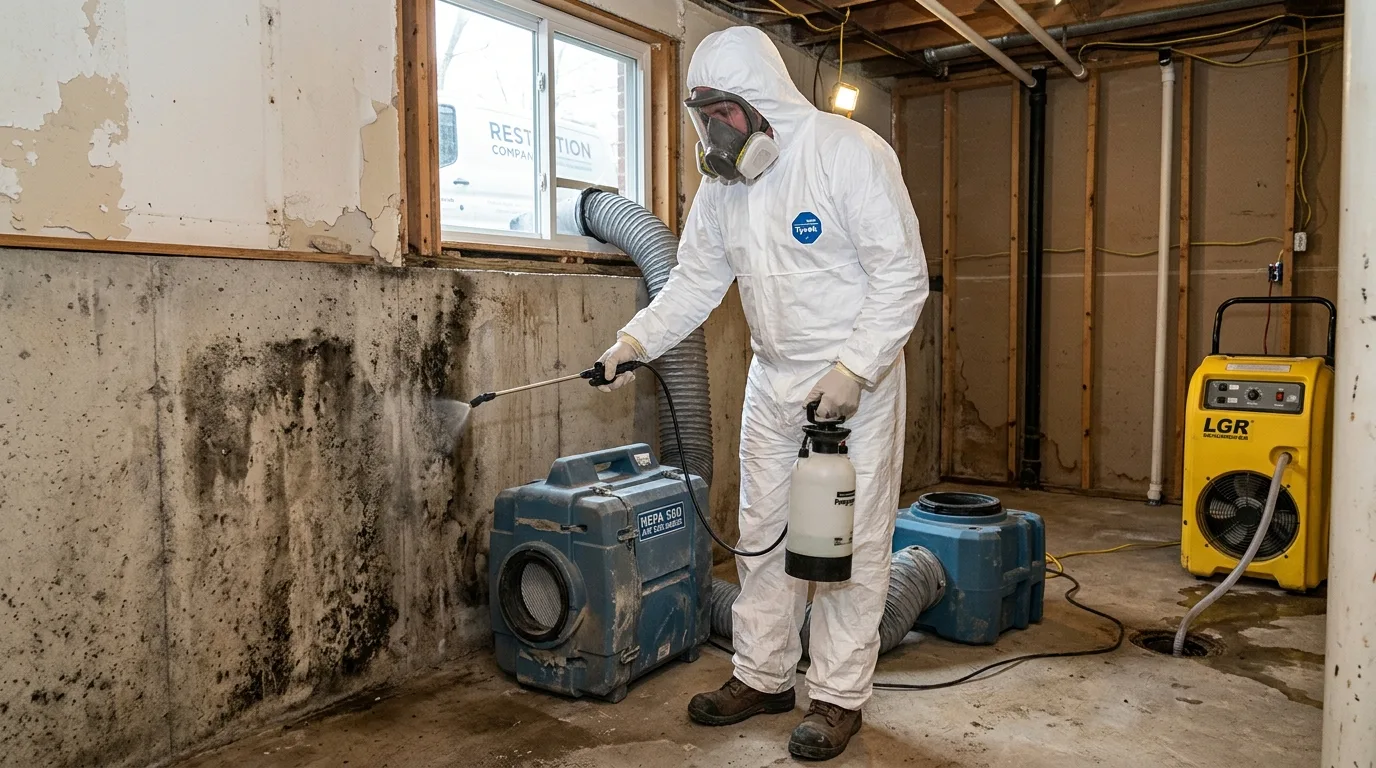
By the time you see mold in your North Richland Hills home, you’re already past the prevention window. Mold establishes a colony and produces viable spores within 24–48 hours of a water event under this region’s conditions — which means the actions you take in the first day after a leak determine whether mold is even a factor in your restoration.
This post covers the specific mold prevention steps for NRH homeowners after any water event, timed to the biology of mold growth in North Texas’s humid climate.
Water Damage in North Richland Hills? Early Response Prevents Mold.
Call (877) 698-1311 immediately — 24/7 dispatch available.
Why Mold Establishes Faster in North Richland Hills
Mold requires three conditions to grow: moisture, organic material (drywall paper, wood framing, cellulose insulation), and temperatures above 40°F. In North Richland Hills, two of those three conditions are nearly always present: organic building materials are ubiquitous in construction, and temperatures rarely fall below 40°F except during hard freezes. Only moisture is the variable — and once a water event introduces it, the clock starts immediately.
North Texas summer conditions (temperatures averaging 96°F highs, persistent Gulf-influenced humidity) reduce the mold establishment window to the short end of the 24–48 hour range. A water event that sits unaddressed through a summer weekend in the Fossil Creek or HomeTown neighborhoods can support significant mold colonization before the homeowner returns Monday morning. Tarrant County’s clay soil, which retains moisture against foundations longer than sandy soils, means basement and lower-level surfaces stay wetter longer — further accelerating mold risk at those levels.
The First 24 Hours: Critical Prevention Actions
Extract standing water immediately: Any standing water must be removed within the first few hours of discovery. Wet/dry shop vacs can handle small amounts while you wait for professional equipment. For any water event exceeding a few gallons, professional truck-mounted extraction equipment is the appropriate response — the volume differential is too large for household equipment to address in the time available.
Open wall cavities if necessary: Water that has entered wall cavities will not dry from the surface. If drywall is soaked, strategic openings at the base of affected walls allow air movers to dry the interior framing and insulation. This is not destruction — it is the necessary step to prevent mold from establishing inside closed walls where it cannot be treated.
Establish airflow and dehumidification: Industrial air movers and dehumidifiers begin moisture extraction from structural assemblies. The combination of moving air and humidity removal creates conditions that prevent mold establishment even in materials that are still elevated in moisture. Household fans help but cannot achieve the psychrometric performance of restoration equipment.
Remove saturated porous materials: Wet carpet and padding act as mold incubators. Extraction alone does not adequately dry carpet padding in the 24-hour window — removal and replacement is the correct protocol for any significant saturation. Wet insulation in walls is similarly non-salvageable; it must come out to allow the framing to dry.
Apply antimicrobial treatment: EPA-registered antimicrobial products applied to all affected surfaces after extraction inhibit mold establishment during the drying period. This treatment is part of standard professional mitigation and should not be skipped.
The 24–48 Hour Window: Monitoring and Adjustment
If extraction and drying equipment is in place from the first day, the 24–48 hour window is about monitoring rather than new actions. Daily moisture readings confirm whether drying is progressing according to the IICRC drying targets or whether additional equipment or additional material removal is needed.
Any surface that is not showing moisture reduction after 24 hours of active drying needs investigation. Common causes: equipment positioning that is directing air away from the wet material, hidden moisture migration to an area not included in the initial drying zone, or clay soil vapor re-wetting materials at the foundation level — the Tarrant County-specific complication discussed in our post on expansive clay soil and water damage.
24-Hour Emergency Response — North Richland Hills Water Damage
Every hour matters for mold prevention. Call (877) 698-1311 now.
Types of Mold Commonly Found After NRH Water Events
Cladosporium: The most common mold found in North Texas homes after water events. Olive-green to black appearance. Establishes on drywall paper, wood framing, and fabric. Not typically considered a high-toxicity mold but can cause respiratory irritation in sensitive individuals.
Penicillium: Blue-green mold that grows on wet drywall, insulation, and wallpaper. Fast colonizer that can spread to adjacent dry areas via HVAC systems. Early establishment is common in NRH’s humid summer conditions.
Aspergillus: Multiple species; appearances vary from white to green to black. Common in water-damaged building materials. Some species produce mycotoxins at higher concentrations.
Stachybotrys (Black Mold): The mold most homeowners are most concerned about. Dark greenish-black, slimy appearance. Requires prolonged moisture (typically 1–2 weeks of sustained saturation) to establish — it is not a common first-responder mold. In NRH, Stachybotrys typically appears in events that were not addressed within the first 7–10 days.
Practical Steps for Long-Term Mold Prevention
Address the moisture source permanently: No amount of surface treatment prevents mold from returning if the moisture source continues. A slow plumbing drip, an HVAC condensate overflow, or clay soil vapor without a proper vapor barrier will continue producing the moisture conditions that support mold. Every mold prevention strategy begins with permanent moisture source correction.
Maintain indoor relative humidity below 60%: In North Richland Hills’s humid summers, running your HVAC in dehumidification mode and monitoring indoor humidity with a hygrometer helps maintain conditions inhospitable to mold. The goal is below 50% relative humidity; below 60% is the practical minimum. See the EPA’s guidance on mold prevention and indoor moisture management.
Annual crawl space inspection: If your home has a crawl space, annual inspection for standing water, moisture on surfaces, and early mold growth is essential. NRH’s clay soil creates persistent crawl space moisture risk that requires ongoing attention.
Post-event professional inspection: After any water event — even one that appeared minor — have a professional moisture assessment confirm that hidden moisture is not present before declaring the event resolved.
Cost Factors for Mold Prevention vs. Remediation
Mold prevention through prompt, professional water damage response costs $1,200–$9,000 for the restoration event. Mold remediation after the fact costs an additional $1,500–$12,000 on top of the original restoration. In North Richland Hills, where Tarrant County’s humidity extends the mold risk window, the economic argument for immediate professional response is straightforward: the entire cost of mold remediation is avoidable with a same-day professional response to any significant water event.
Frequently Asked Questions
How quickly does mold grow after water damage in North Richland Hills?
In North Richland Hills’s summer conditions, mold can begin establishing within 24 hours of a water event. In winter, when temperatures are lower, the window extends to 48–72 hours. The practical takeaway is that professional extraction and drying that begins within 24 hours of discovery prevents mold in the large majority of water damage scenarios in NRH.
Can I prevent mold with bleach spray after water damage?
Bleach on non-porous surfaces (tile, metal, glass) kills surface mold effectively. On porous materials (drywall, wood), bleach cannot penetrate to kill mold growing in the substrate — it kills surface cells while leaving the root structure intact, and the mold regrows. For any porous material with mold growth, removal is required. Bleach spray is also not a substitute for HEPA extraction and antimicrobial treatment during professional mold remediation in North Richland Hills.
Is mold covered by homeowner’s insurance in Texas?
Mold resulting from a covered sudden water event (burst pipe, covered storm damage) is typically covered when addressed promptly. Mold resulting from a slow leak the homeowner knew about and failed to address is typically not covered. In Tarrant County, prompt action and documentation of the water event’s sudden nature protects your coverage position for any associated mold.
Prevent Mold With Immediate Response in North Richland Hills
Same-day emergency dispatch available. Call (877) 698-1311.
Related: