Flash Flooding in North Richland Hills, TX: Emergency Steps Guide
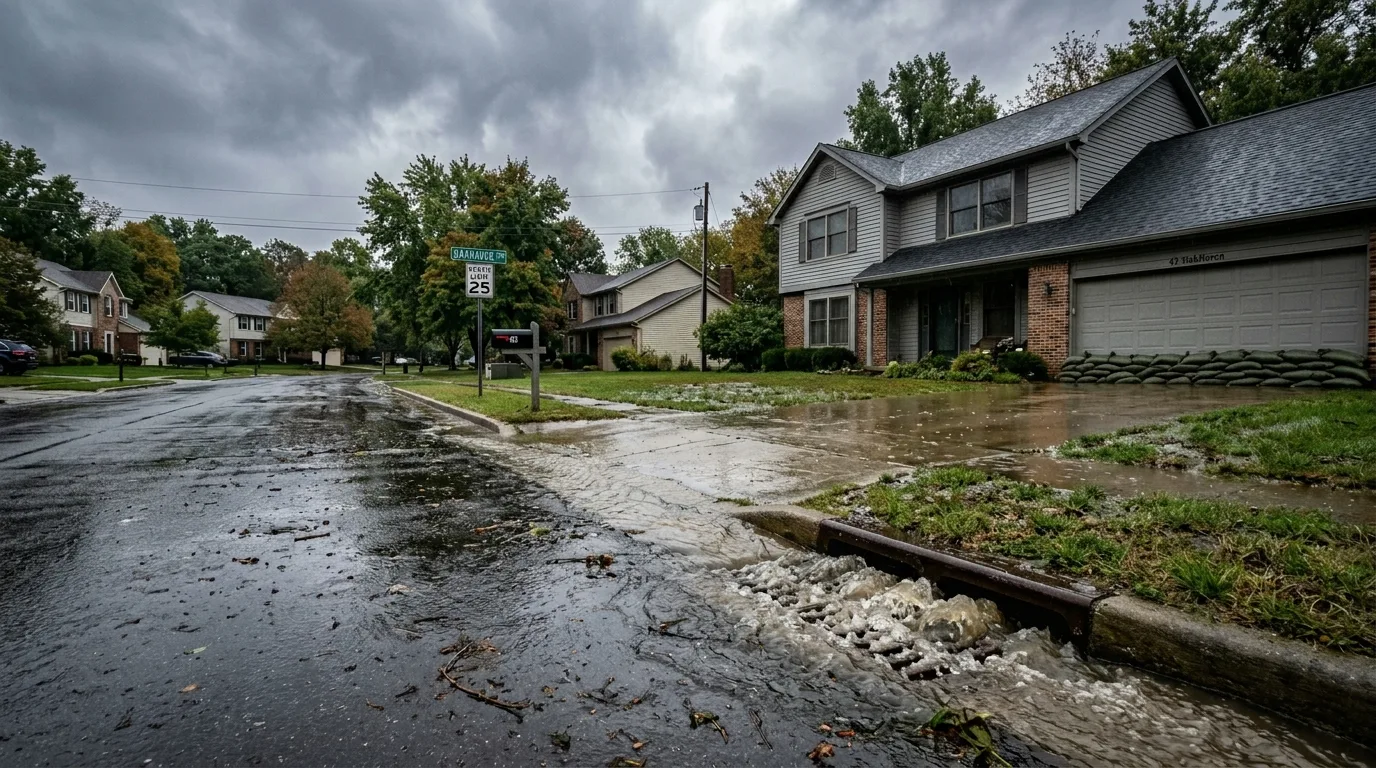
When a flash flood watch becomes a warning in North Richland Hills, you may have less than 30 minutes before water is moving through your neighborhood. Flash flooding along the I-820 corridor and in the drainage basins serving Fossil Creek and Green Valley can develop faster than weather apps can update — and the homeowners who minimize damage are the ones who know exactly what to do before the water arrives.
In this post, we cover the emergency steps that protect your family and property during and immediately after a flash flood event in North Richland Hills.
Flood Damage After a North Richland Hills Storm?
Call (877) 698-1311 — 24/7 emergency flood cleanup dispatch.
Why Flash Flooding Develops Quickly in North Richland Hills
North Richland Hills receives the bulk of its annual rainfall in concentrated spring thunderstorm events. The combination of Tarrant County’s expansive clay soil — which becomes nearly impermeable when saturated — and the city’s position in the I-820 drainage basin means stormwater from surrounding areas concentrates rapidly. A storm that drops 2 inches in 90 minutes can produce flooding that peaks within 2–3 hours of the rain beginning, before many homeowners realize the threat.
Homes in lower-elevation sections near the Meadow Lakes area and along drainage channels experience this most severely. Properties that appeared safe during moderate spring rains can flood significantly during major events because the drainage system’s capacity is not linear — it handles moderate rainfall adequately but becomes overwhelmed quickly once a threshold is crossed. This non-linear behavior means homeowners shouldn’t assume prior seasons without flooding mean they are not at risk.
Immediate Steps When Flash Flooding Threatens
Step 1 — Move valuables above flood level: If you have any warning time, move important documents, electronics, medications, and irreplaceable items to upper floors or high shelves. Elevate furniture where possible. Even 6–12 inches of additional elevation protects many items from minor flooding events.
Step 2 — Shut off electricity to affected areas: If water is approaching or has entered your home, shut off circuit breakers for all ground-floor and lower-level circuits. Do not touch electrical panels, outlets, or appliances while standing in or near water. If your electrical panel is at risk of flooding, contact your utility to shut off power at the meter.
Step 3 — Do not drive through flooded roads: Six inches of moving water can knock a person down. Twelve inches can float most vehicles. The most common flood-related fatalities in North Texas involve vehicles entering flooded roadways. Turn Around, Don’t Drown is not a suggestion — avoid any roadway with water flowing across it regardless of depth appearance.
Step 4 — Sandbag doorways if time permits: A single layer of sandbags at door thresholds provides limited but meaningful resistance to shallow floodwater. They are most effective against 1–6 inches of flooding. Pre-purchased sandbags stored before storm season allow you to act in minutes.
Step 5 — Document everything before cleanup begins: Once the immediate threat has passed and it is safe to enter, document the water level marks on walls with tape and photograph all affected areas before removing any water. This documentation is essential for insurance claims.
Practical Uses of Emergency Flood Response Knowledge
Insurance claim protection: The photos and video you take in the first hour after flooding stops are your primary evidence for insurance claims. Water level marks on walls, damaged contents in place, and timestamps on photos all support your claim. Carriers often dispute claims when homeowners clean up before documentation is complete.
Identifying contamination level: Not all floodwater is equal. Clear water from a burst supply line is Category 1 and is relatively safe to wade through briefly. Murky water that entered from outside may contain Category 2 or 3 contaminants including sewage from overwhelmed municipal systems. Do not allow children or pets to contact outdoor floodwater regardless of appearance — in North Richland Hills, municipal sewer surcharging during major storms is common and contamination is not always visible.
Recognizing when to call for professional help: Any flooding event that soaked carpet, subfloor, drywall, or went above the baseboard requires professional water extraction and structural drying — not just fan-drying with household equipment. Household fans create air movement but cannot achieve the psychrometric drying needed to address moisture inside wall cavities.
Mold prevention timeline: In North Texas summer conditions, mold can begin establishing within 24 hours of a flood event. Extraction and professional drying that begins within the first 24 hours dramatically reduces mold risk. Delays of 48–72 hours nearly always result in mold growth that adds remediation to the restoration scope.
Working with your insurance adjuster: Most carriers want to send an adjuster before major work begins. Call your insurance company immediately after documenting the damage — most have 24/7 claims lines. We work alongside your adjuster process and provide documentation they need, but extraction and mitigation should begin within 24 hours regardless of adjuster timing; most policies allow you to begin mitigation to prevent further damage.
After the Flood: What to Avoid
Do not use a regular wet/dry shop vac to extract significant flooding — the capacity is insufficient for large volumes and they are not designed for extraction from carpet or structural assemblies. Do not use household fans alone for drying — they move surface air but do not extract moisture from wall cavities or under flooring. Do not close up rooms and turn up the heat to “dry out” — this raises humidity inside the space and accelerates mold growth rather than eliminating it.
Do not attempt to clean up sewage-contaminated floodwater without proper PPE. If the flooding entered from outside and may contain mixed sewage (a common scenario in North Richland Hills during major storms), treat it as Category 3 and call for professional sewage cleanup in North Richland Hills immediately.
Cost Factors for Flash Flood Restoration in North Richland Hills
Flood damage cleanup in North Richland Hills runs $3,000–$8,000 for typical residential events. Multi-room events with finished lower levels can reach $15,000. The most significant cost variables are: how quickly extraction began (every hour of delay increases the scope), whether sewage contamination is present (Category 3 events cost 40–60% more than equivalent clean water events), and how much structural material requires removal and replacement. Early response is the single most controllable cost variable.
Frequently Asked Questions
What should I do first when flash flooding enters my North Richland Hills home?
First: shut off electricity to affected areas. Second: do not enter rooms with standing water if outlets or fixtures might be submerged. Third: document everything with photos and video before touching anything. Fourth: call (877) 698-1311 for 24/7 emergency flood cleanup dispatch. The faster extraction begins, the lower your total damage and restoration cost.
How do I know if flash flood water in my home contains sewage contamination?
Outdoor floodwater in North Richland Hills during major storms should be treated as potentially Category 3 contaminated regardless of appearance. The municipal sewer system surcharges during heavy rain events, mixing sewage with stormwater in ways that are not visible. If water entered from outside your home, assume contamination and treat accordingly. We perform contamination assessment as part of every flood response.
Can I stay in my home after flash flooding in North Richland Hills?
It depends on the extent of flooding and the category of water involved. Minor flooding from clean water that is promptly extracted and dried may allow you to remain with some inconvenience. Significant flooding, Category 3 contamination, or structural drying that requires extensive equipment and open wall cavities typically requires temporary relocation. We assess habitability as part of the initial response and advise you based on the actual conditions.
Flash Flood Cleanup in North Richland Hills
Every hour counts. Call (877) 698-1311 for immediate emergency dispatch — serving North Richland Hills and all of Tarrant County.
Related: