IICRC Certification: Why It Matters for Your NRH Restoration Company
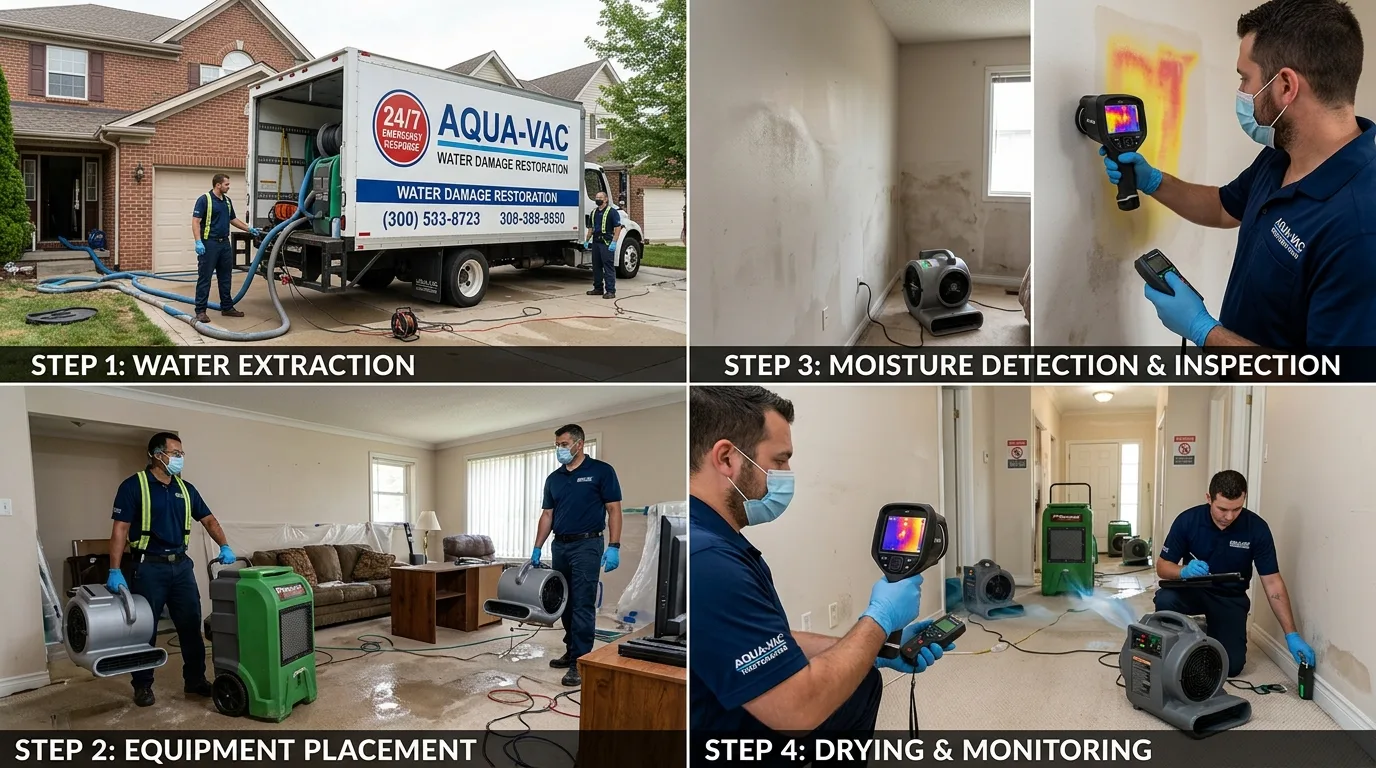
When your North Richland Hills home floods at 2 AM, the last thing on your mind is credential verification. But the contractor you choose in that moment determines whether your home is genuinely restored or just appears to be — and IICRC certification is the clearest indicator of the difference. Here’s what the certification actually means and why it matters specifically for Tarrant County homeowners.
In this post, we explain what the IICRC is, which certifications matter most for water damage restoration, and the practical questions to ask any contractor before authorizing work.
IICRC Certified Water Damage Restoration in North Richland Hills
Active certifications, documented protocols, complete insurance packages. Call (877) 698-1311.
What the IICRC Is and Why It Matters
The Institute of Inspection Cleaning and Restoration Certification (IICRC) is the industry standards body for restoration, cleaning, and inspection professionals. The IICRC writes the standards (S500 for water damage restoration, S520 for mold remediation, S540 for trauma cleanup) that govern how work should be performed, and certifies technicians and firms that demonstrate knowledge of these standards through examination and continuing education.
IICRC certification matters for water damage restoration in North Richland Hills for several specific reasons:
Insurance documentation requirements: Most major carriers now require that mitigation work be performed by IICRC certified technicians and firms. Moisture logs, drying reports, and scope documentation from non-certified contractors are more likely to be disputed or denied. If your restoration company cannot produce current IICRC certification, your claim is at risk.
Scientific drying standards: The IICRC S500 standard defines specific moisture content goals that must be achieved before reconstruction can safely begin. A non-certified contractor who runs fans until the floor feels dry has not met this standard. Residual moisture sealed inside closed walls leads to mold — often discovered months later when reconstruction has to be torn out and redone.
Mold remediation protocols: The IICRC S520 standard defines containment, removal, and clearance testing protocols for mold remediation. Without certification, there is no guarantee that these protocols are being followed — and incorrect mold remediation can spread spores rather than eliminate them.
Key IICRC Certifications to Require
WRT — Water Damage Restoration Technician: The foundational certification for anyone performing water damage restoration. Tests understanding of water behavior, material response, drying principles, and documentation. Every technician physically working on your home should hold an active WRT.
ASD — Applied Structural Drying: Advanced certification specifically focused on the science of structural drying — psychrometrics, equipment selection and placement, drying verification. The ASD is what separates technicians who set up fans by intuition from those who calculate equipment placement based on science. Require at least one ASD certified technician on every project.
AMRT — Applied Microbial Remediation Technician: The mold-specific certification. For any project involving mold remediation, require active AMRT certification. This certification tests knowledge of containment, HEPA filtration, antimicrobial treatment, and clearance testing — the complete S520 protocol.
FSRT — Fire & Smoke Restoration Technician: Relevant if your water damage event also involves smoke or fire damage (common in NRH when electrical issues follow flooding events).
Firm certification: Beyond individual technician certification, look for an IICRC Certified Firm designation. This means the firm itself has committed to a code of ethics and maintains certified staff. Individual certified technicians working for an uncertified firm may not have the same oversight and quality management systems.
Verify Our IICRC Certifications — We Welcome the Question
Active WRT, ASD, and AMRT certifications on staff. Call (877) 698-1311.
Practical Uses: Questions to Ask Before Authorizing Work
“Can I see your current IICRC certificates?” Any legitimate certified contractor will provide certificates without hesitation. Certification numbers can be verified at the IICRC verification portal. If a contractor is vague about certification or provides a card rather than a certificate, that’s a red flag.
“Which certification covers drying verification?” The correct answer is ASD (Applied Structural Drying). A contractor who cannot name this certification or who describes their drying verification as “we run the equipment until it feels dry” does not have the technical training for scientifically verified structural drying.
“What moisture content goals will you use for my specific materials?” The IICRC S500 standard provides specific equilibrium moisture content values for different material types and regional climate conditions. A certified technician will reference these values. A non-certified contractor will likely give a vague answer.
“How do you document the drying process?” The correct answer involves daily moisture readings at multiple measurement points, psychrometric logs (temperature and relative humidity inside the drying chambers), and a final drying report at project close. This documentation is your evidence for the insurance claim and for future property transactions.
“Have you worked with [insurance carrier] claims before?” Experience with specific carriers matters because documentation requirements vary. Technicians who understand Tarrant County’s insurance market and common carrier requirements produce documentation that processes smoothly.
The HomeTown and Fossil Creek Area Market Context
North Richland Hills has a mix of national franchise restoration companies (SERVPRO of North Richland Hills, Restoration 1 of North Fort Worth, Dalworth Restoration) and smaller local operators. National franchises guarantee IICRC-aligned protocols at the brand level, but individual franchise quality varies. The IICRC certification of the specific technicians assigned to your project — not just the brand name on the truck — is what protects your project.
For homeowners in the Iron Horse and Green Valley areas, where older housing stock and Tarrant County’s clay soil create more complex drying scenarios, certified technicians with specific experience in local conditions provide better outcomes than technicians applying generic protocols regardless of credential.
Cost Considerations for IICRC Certified Work in North Richland Hills
Certified restoration in North Richland Hills runs at market rates — IICRC certification doesn’t dramatically increase cost over non-certified work. What it does change is outcome reliability. The cost of non-certified work that fails — mold discovered in closed walls, an insurance claim disputed for inadequate documentation, reconstruction that must be torn out — routinely exceeds the entire original restoration cost. Certified work is not a premium; it is the floor standard for work that genuinely solves the problem.
Water damage restoration in North Richland Hills runs $1,200–$15,000+ depending on scope. See our full cost guide for 2026 for detailed breakdowns.
Frequently Asked Questions
How do I verify IICRC certification for a North Richland Hills restoration company?
Ask for the technician’s certification number and verify it at the IICRC’s online verification portal (iicrc.org). Firm certification can also be verified through the same portal. Verification takes under a minute. Any contractor who resists providing certification numbers for verification should not be trusted with your property.
Is IICRC certification required by Texas law for water damage restoration?
IICRC certification is not mandated by Texas state law for general water damage restoration. However, many insurance carriers contractually require IICRC certified work for coverage eligibility. In practice, the carrier requirement makes certification nearly mandatory for professionally managed restoration projects in Tarrant County. Always confirm your carrier’s requirements with your adjuster.
What’s the difference between an IICRC certified firm and an uncertified contractor?
An IICRC Certified Firm has committed to maintaining certified staff, following published standards, and adhering to a code of ethics. Uncertified contractors have no external accountability for meeting drying standards, documentation requirements, or safety protocols. For projects involving insurance claims or any structural material drying, the documentation difference alone makes certified firms the only appropriate choice.
About Our North Richland Hills Team
Active IICRC certifications, insurance documentation expertise, local Tarrant County knowledge. Call (877) 698-1311.
Related: