Category 1, 2, and 3 Water Damage: NRH Homeowners Guide
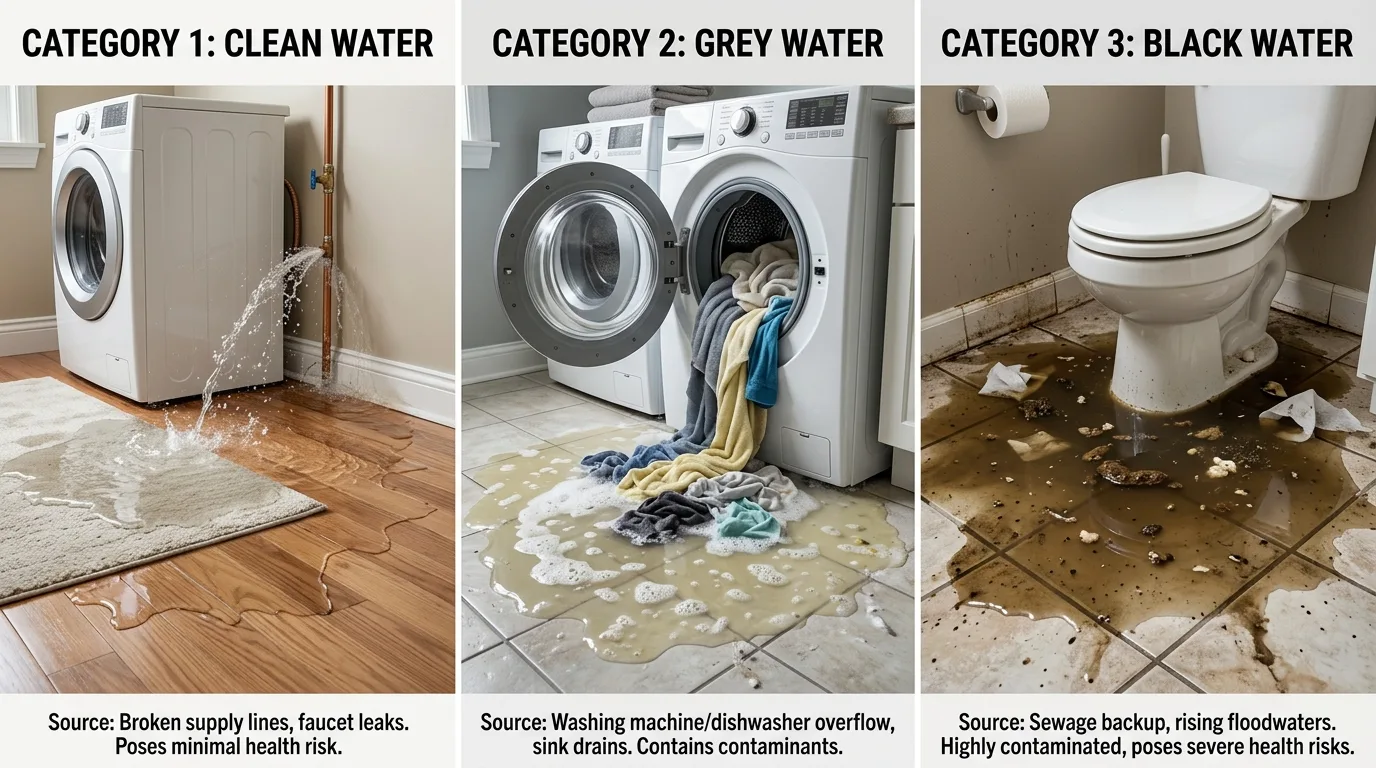
Not all water damage is the same — and the difference between a Category 1 burst pipe and a Category 3 sewage flood isn’t just severity. It determines the entire cleanup approach, what materials can be saved, what health precautions are required, and what the restoration will cost. Understanding the three water damage categories before you call for help makes every subsequent conversation easier and protects you from incomplete or incorrect restoration.
In this post, we explain each water damage category, how they commonly occur in North Richland Hills homes, and what the category means for your family’s safety and your restoration cost.
Water Damage in North Richland Hills? We Assess Category on Arrival.
Call (877) 698-1311 — 24/7 IICRC certified response for all water categories.
Category 1: Clean Water
Category 1 water originates from a sanitary source and poses no immediate health risk from exposure. In North Richland Hills homes, Category 1 events are the most common:
Typical sources: Supply line failures (burst pipes from winter freezes, failed washing machine supply hose, refrigerator ice maker line failure), toilet tank overflow (tank water only, not bowl), rain water entering through a storm-damaged roof opening before contacting contaminated surfaces.
What it means for cleanup: Category 1 water can saturate structural materials and cause significant damage, but the materials themselves are not contaminated. Salvage decisions are based on saturation level and drying potential, not contamination. Porous materials (carpet, drywall) can often be dried in place if extraction and drying begin within 24–48 hours. Beyond 24–48 hours, Category 1 water progressively degrades to Category 2 as bacteria begin multiplying.
Health implications: Category 1 water does not require special PPE beyond standard work protection for the cleanup crew. Occupants can typically remain in the unaffected portions of the home during mitigation.
Typical cost in North Richland Hills: $1,200–$5,000 for mitigation depending on scope. Reconstruction is separate and depends on materials affected.
Category 2: Gray Water
Category 2 water contains significant contamination and poses a health risk if ingested or through prolonged exposure. It is not immediately life-threatening but cannot be treated as clean water.
Typical sources: Discharge from washing machines or dishwashers, overflow from sinks or tubs (water that has contacted human use surfaces), sump pump failures that have mixed with groundwater, toilet bowl overflow (water that may contain urine or mild contamination but not sewage).
What it means for cleanup: Category 2 water requires a more conservative approach to material salvage. Carpet and padding contacted by Category 2 water are typically removed rather than dried in place. Drywall below the waterline is evaluated based on saturation but often removed. All surfaces are treated with antimicrobial solutions after extraction. Crew works in appropriate PPE.
Health implications: Children, elderly individuals, and those with compromised immune systems should stay out of affected areas during and shortly after cleanup. Category 2 events near the HomeTown district and throughout North Richland Hills are commonly associated with appliance failures in kitchens and laundry areas.
Typical cost in North Richland Hills: $2,000–$6,000 for mitigation, higher material removal rates than Category 1.
Category 3: Black Water
Category 3 water is grossly contaminated and contains pathogens including bacteria, viruses, and parasites that pose serious health risks. All materials contacted by Category 3 water are treated as contaminated regardless of appearance.
Typical sources: Sewage backup from toilet drains, floor drains, or sewer connections — especially common in North Richland Hills during spring storms that surcharge the municipal sewer system. Outdoor floodwater (even if it looks clear, outdoor water from storms may contain sewage overflow). Rising water from flooding events. Certain long-standing Category 2 events that have been contaminating for more than 72 hours.
What it means for cleanup: All porous materials — carpet, padding, drywall, insulation — that contacted Category 3 water are removed and disposed of as biohazardous material. Non-porous structural surfaces are thoroughly cleaned and treated with EPA-registered disinfectants. Full PPE including respirators, disposable suits, and gloves are required throughout the cleanup. Cleanup documentation includes disposal manifests for contaminated materials.
Health implications: Vacate Category 3 affected areas immediately. Do not allow children or pets to contact Category 3 water under any circumstances. Category 3 pathogens including E. coli, hepatitis A, and other dangerous organisms can cause serious illness from minimal exposure. The affected area should be completely closed off until professional remediation is certified complete.
Typical cost in North Richland Hills: $2,000–$15,000+ for mitigation depending on scope. Category 3 adds 40–60% to the cost of equivalent clean-water events due to biohazard protocols, licensed disposal, and antimicrobial treatment requirements. In Tarrant County, the most expensive Category 3 events involve sewage backups into finished lower levels during major spring storm events.
Practical Uses: Category Assessment in Real Situations
Identifying your event category: If the water is clear and came from a supply line or rain, start with Category 1. If it came from appliance discharge or overflow of a used fixture, treat as Category 2. If any outdoor floodwater, sewage, or toilet drain water is involved, treat as Category 3. When in doubt, the IICRC standard is to treat the event at the higher category.
Making material salvage decisions: Category 1 events give you the best chance to save structural materials in place. Category 2 events require more conservative removal. Category 3 events require removal of all porous materials — there is no salvage option for drywall, insulation, or carpet that has been contaminated by sewage. This is not a negotiable restoration choice.
Understanding cost differences: When comparing estimates from different restoration companies, verify that they are quoting for the same water category. A lower estimate for a Category 3 event that doesn’t include proper biohazard protocols and disposal is not a better deal — it is an incomplete scope that will leave your home incompletely remediated.
Timing and degradation: Category 1 water degrades over time. Within 24 hours, bacterial growth begins elevating Category 1 toward Category 2. Within 72 hours in NRH’s warm, humid conditions, a delayed response to a clean water event may require Category 2 protocols for the same event that would have been simpler Category 1 work with prompt response.
IICRC Certified for All Water Categories in North Richland Hills
Proper protocols for Category 1, 2, and 3 events. Call (877) 698-1311.
Cost Factors by Category in North Richland Hills
Water damage restoration costs in North Richland Hills run: Category 1: $1,200–$5,500 for mitigation; Category 2: $2,000–$7,000 for mitigation; Category 3: $2,000–$15,000+ for mitigation. These ranges reflect the same event scope at each contamination level — the category premium is real and non-negotiable. Reconstruction costs are comparable across categories once mitigation is complete. See our 2026 water damage cost guide for North Richland Hills for full breakdowns.
Frequently Asked Questions
How do I know what category my water damage is in North Richland Hills?
Source identification is the primary method. Clean supply line water = Category 1. Appliance or fixture overflow = Category 2. Any sewage, outdoor flood, or drain backup = Category 3. If there’s any ambiguity, our technicians assess category on arrival using source identification and inspection protocols. Treating uncertain events at the higher category is always the safer choice.
Can Category 3 water damage be covered by insurance in Texas?
Yes — standard homeowner’s insurance covers sudden sewage backup events if you have a sewage backup endorsement. Without the endorsement, sewage backup is excluded. Many Tarrant County homeowners discover they lack this endorsement when they most need it. For storm-flooding events that introduce Category 3 contamination, the same flood exclusion applies — NFIP flood insurance is required for rising water. We help document the source and category for your adjuster.
Is it safe to stay in my home after Category 2 water damage?
Generally yes, if the affected area is a limited space (a bathroom or laundry room) and you can stay out of the wet area during mitigation. For larger Category 2 events affecting common living spaces, temporary relocation during active drying may be recommended. For any Category 3 event, affected areas should be vacated until professional remediation is certified complete. We assess habitability as part of every initial inspection.
Water Damage Restoration for Any Category in North Richland Hills
Proper protocols, complete documentation, insurance support. Call (877) 698-1311.
Related: